If you've ever felt a dull, nagging ache around the front of your knee after a run, you might be dealing with runner's knee. It's one of the most common complaints among people who run, hike, or spend a lot of time on their feet, and it has a way of showing up right when your training is finally picking up momentum.
The good news is that runner's knee is highly treatable, and a chiropractor can play a bigger role in your recovery than most people realize. At Midtown Chiropractic & Physical Therapy in Chicago's Lakeview neighborhood, we see this condition often, and we know how frustrating it can be to feel sidelined from something you love.
What Is Runner's Knee, Exactly?
Runner's knee, medically known as patellofemoral pain syndrome, refers to pain around or behind the kneecap. It happens when the kneecap doesn't track smoothly within the groove of the thigh bone as you bend and straighten your knee. Over time, that friction irritates the surrounding tissue and produces the aching, sometimes grinding sensation many runners describe.
It's not caused by one dramatic injury. Instead, it tends to build gradually from repetitive stress, especially when there's an underlying issue like muscle imbalance, poor alignment, or overuse. That's why simply resting for a week rarely solves the problem for good. If the mechanical cause isn't addressed, the pain often returns as soon as training ramps back up.
Common Causes Behind the Pain
Several factors can contribute to runner's knee, and identifying the actual root cause is the key to lasting relief. Some of the most frequent culprits include:
- Weak hip and glute muscles, which change how the leg tracks during each stride
- Tight quadriceps, hamstrings, or IT bands pulling the kneecap out of alignment
- Overpronation or other foot mechanics issues
- A sudden increase in mileage or hill training
- Worn out or unsupportive running shoes
- Poor running form, especially overstriding or heavy heel striking
Because so many of these causes originate above or below the knee itself, treatment that only focuses on the knee joint often misses the bigger picture. This is exactly why a proper assessment matters so much before starting any treatment plan.
How Chiropractic Care Fits Into Recovery
This is where chiropractic care becomes valuable. Rather than just addressing the site of pain, a chiropractor looks at the entire kinetic chain, from the hips down to the feet, to figure out what's actually driving the dysfunction. Dr. Kyle Grisius, who trained in the McKenzie Method and Active Release Technique, focuses on this whole body approach with every patient who comes in with a lower body overuse injury.
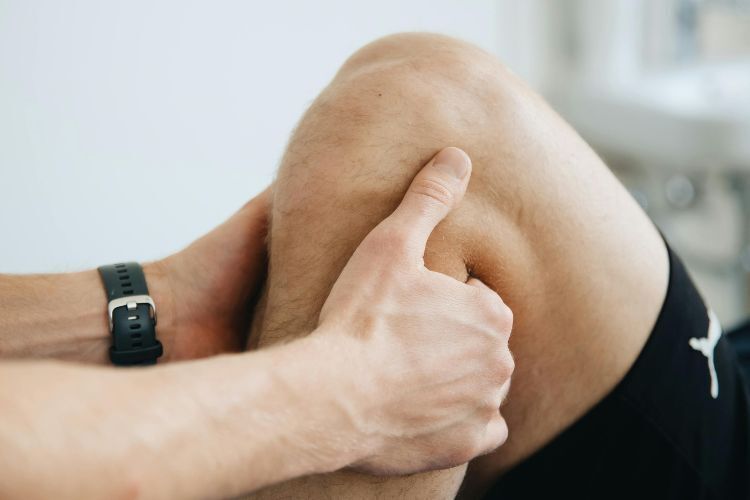
Active Release Technique in particular is well suited for runner's knee. It targets the soft tissue restrictions in the quadriceps, IT band, and hip flexors that often pull the kneecap out of its natural tracking path. By releasing that tension, the joint can move the way it's supposed to, which reduces the irritation causing the pain in the first place.
Chiropractic adjustments can also help when hip or pelvic alignment is contributing to the problem. Even small asymmetries in how weight is distributed through the legs can add up to significant stress on the knee over hundreds or thousands of running strides.
Why a Runner's Perspective Matters
One thing that sets our clinic apart is that we genuinely understand the running mindset. Dr. Quinci Herll, one of our chiropractic physicians, is an avid marathoner who has qualified for the Boston Marathon. She knows firsthand that telling a runner to simply stop running is rarely realistic or even necessary. Instead, treatment plans are built around keeping you moving safely while the underlying issue is corrected.
Dr. Peter Kinsella brings a similarly detailed approach to runner's knee cases. Trained in the McKenzie Method, Dynamic Neuromuscular Stabilization, and the Motion Palpation Institute, he takes a close look at movement patterns and joint mechanics to find exactly where the breakdown is happening. That level of assessment often reveals issues, like a stiff hip or an underactive glute, that a runner would never suspect were connected to their knee pain.
This matters because runner's knee recovery time varies a lot depending on how early the issue is addressed and how consistent you are with the corrective work. Runners who get evaluated early, rather than pushing through pain for weeks, tend to bounce back considerably faster.
When Runner's Knee Needs a Professional Eye
Mild soreness after a long run is normal, but certain signs suggest it's time to get evaluated rather than wait it out. These include pain that lingers for more than a few days, swelling around the kneecap, a popping or grinding sensation with movement, or pain that starts interfering with walking, stairs, or daily activities.
Ignoring these signals and continuing to train through them often extends the recovery timeline significantly. What might have taken two or three weeks to resolve with early intervention can turn into a months long setback if the underlying cause is never addressed.
Stretches and Exercises That Support Recovery
Alongside hands on treatment, targeted exercises for runner's knee are essential for long term results. A well built program usually progresses from gentle mobility work toward more targeted strength training as the pain settles down. A few examples that are commonly built into a recovery plan include:
- Straight leg raises to strengthen the quadriceps without stressing the joint
- Clamshells and side leg raises to build hip and glute strength
- IT band and quad stretches to relieve tension pulling on the kneecap
- Step downs and controlled lunges to retrain proper knee tracking
- Single leg balance drills to improve stability through the whole leg
Knee strengthening exercises for runners work best when they're paired with an accurate diagnosis of what's driving the imbalance. Doing generic stretches without knowing the actual cause can sometimes help temporarily, but it rarely resolves the issue for good. This is why our physicians build individualized plans rather than handing every runner the same printed sheet of exercises.
How to Fix Runner's Knee for the Long Term
If you're wondering how to fix runner's knee so it doesn't keep coming back, the honest answer is that it takes a combination of soft tissue work, targeted strengthening, and often some adjustments to training habits. This might mean gradually increasing mileage instead of ramping up quickly, rotating running shoes more often, or incorporating strength training into your weekly routine.
A thorough evaluation helps determine which of these factors matter most for your specific situation. That's the value of working with a provider who treats the whole picture rather than just prescribing rest and anti-inflammatories. Between Dr. Grisius & Dr. Kinsella our team brings several different lenses to the same goal of getting you back to running comfortably.
Getting Back to Running, Pain Free
Runner's knee doesn't have to mean the end of your training season. With the right combination of chiropractic care, soft tissue therapy, and a smart strengthening plan, most runners see real improvement and get back to doing what they love.
If knee pain has been holding you back, our team at Midtown Chiropractic & Physical Therapy is here to help you figure out what's really going on and build a plan to get you moving again. Schedule a visit with us in Chicago's Lakeview neighborhood today, and let's get you back on the road or the trail with confidence.
.jpg)
.jpg)